Branch 2 general household pest control
Pet-Friendly Pest Control for Homes With Dogs and Cats
You have a dog that lives on the back patio, or a cat that sleeps under the bathroom sink where the ants come in, and before you call anyone about the ants you want a straight answer about the animals. Homeowners searching for pet friendly pest control are asking a fair question, and the honest answer is not a slogan. It is a description of how the work is done and what governs it.
Monday to Friday, 8 a.m. to 5 p.m. Estimates come from your home’s square footage and what you are seeing.
SourcesWritten from the interview with Jeff Alexander, Apex’s verified business facts, and the references linked at the end of the page.Last updated September 2026.
Apex Pest Control has treated Sacramento-area homes since 1978 under Branch 2 general household pest control registration No. 2770. Almost every home on the route has a pet, and the president of the company, Jeff Alexander, spent years as an industrial hygienist before he ran a route. This page explains what that means for your dog or cat on the day of a visit, without making a promise that a pesticide label does not let anyone make.
What the Label Actually Governs When You Have Pets
Every product a licensed technician applies carries a label approved by the U.S. Environmental Protection Agency and registered in California. The label is the law: it states where the product may be applied, in what amount, and what people and animals should do after application. No pest control company can lawfully promise more than the label says, and the Brand Guide Apex works to rules out absolute safety words for exactly that reason.
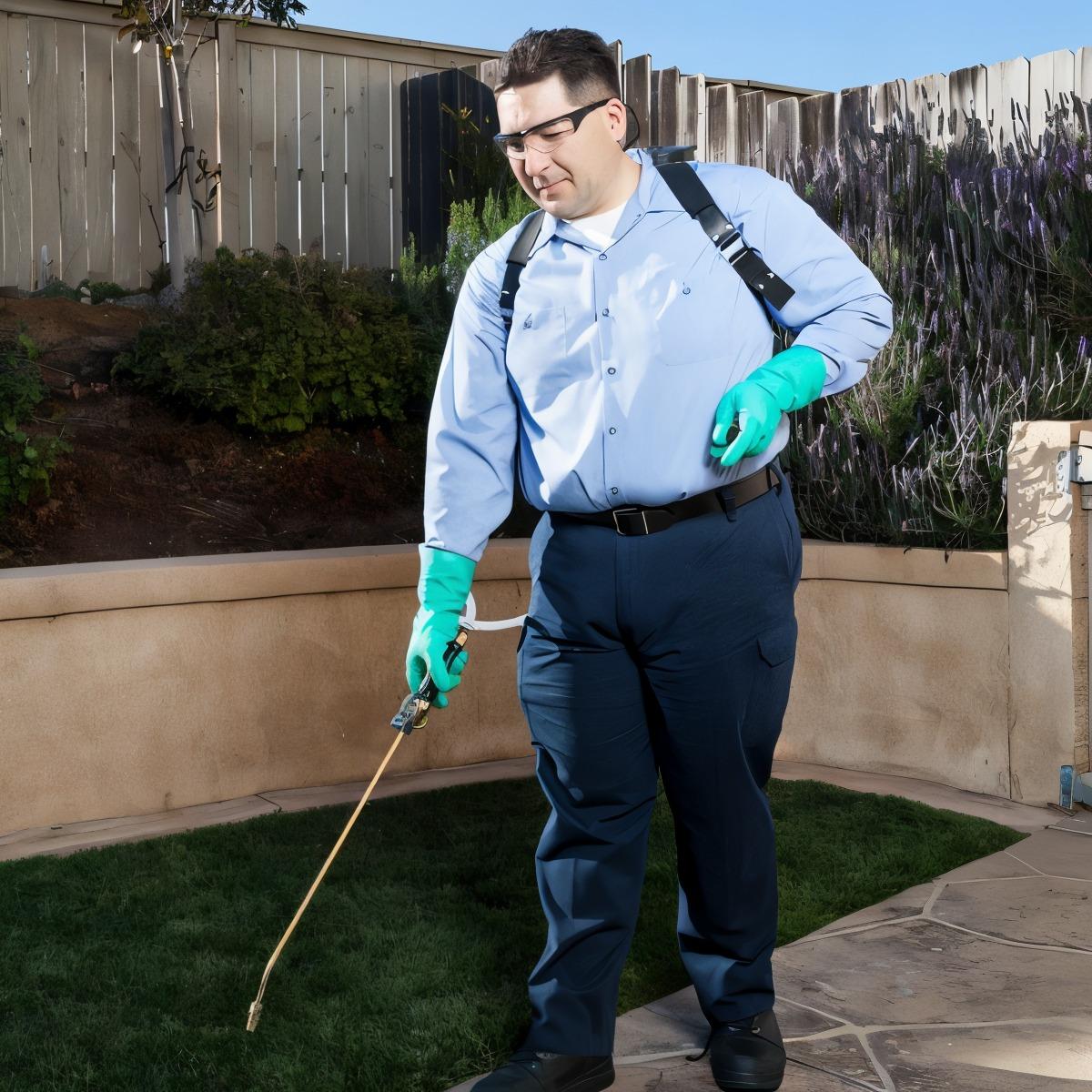
So when a homeowner asks what pest control means for their pets, the useful answer is a set of practices. Which product was chosen and why. Where it went and where it did not. How long the treated areas stay off limits, which comes from that product's label and from the weather that day. Apex answers those questions at the door, in writing on the service ticket, and again on the phone if you call the office later.
How it works
How We Treat Homes With Pets
The visit follows the same sequence as every Apex first visit, with the animals part of the interview from the first minute.
The interview starts with the pets
The technician asks whether there are dogs, cats, birds, reptiles or fish in the home, where each one spends its time, and where food and water bowls sit. A real Google review from a customer named Avery describes the technician asking about pets and then asking to meet them. That is the standard, not the exception.
Product selected for the pest, the location and the label
Apex chooses the method for the pest and the place it is found, then follows the label requirements for that product. A bait placed in a crack behind a cabinet is a different decision from a liquid on the exterior foundation, and both are made with the label in hand.
Baits and stations placed out of reach
Ant baits go in cracks, voids and behind fixtures rather than on open floor. Where rodent bait stations are used at all, they are tamper-resistant and placed where a dog or cat cannot get into them. Baiting is often the lower-exposure choice as well as the effective one.
Interior treatment where the activity is, not everywhere
The initial visit treats inside where the pest is active, with low-odor products, and the exterior barrier around the foundation, garage, doors, windows and first-floor eaves. At most homes the inside needs retreatment less than once a year; regular visits work outside.
Re-entry and drying guidance for what was applied that day
Before leaving, the technician tells you how long to keep people and pets off the treated areas for the specific product used, and notes it on the ticket. Treated surfaces stay off limits until dry. Drying time changes with the weather, so there is no single blanket waiting period, and Apex will not invent one.
Before the technician leaves
Water bowls moved back, gates closed, the dog let back out only when the technician says the exterior is ready. Web removal and a last look at the places a pet might reach.
What you can do
What Pet Owners Should Do Before and After a Visit
A little preparation lets the technician treat where the pest is and keeps the animals clear of the work.
- Tell the office about every animal when you book, including fish tanks and bird cages
- Bring food and water bowls, pet beds and toys inside from any exterior area to be treated
- Cover or move aquariums and turn off air pumps in a room being treated inside
- Keep pets in a separate room or outside the treated zone during the visit
- Follow the re-entry and drying guidance on your ticket for the product used that day
- Bring outdoor pet food in at night; a bowl on the porch draws ants, roaches and rodents
- Call the office with the product name from the ticket if you have a question later
Fleas and Ticks: The Pests That Arrive With the Pet
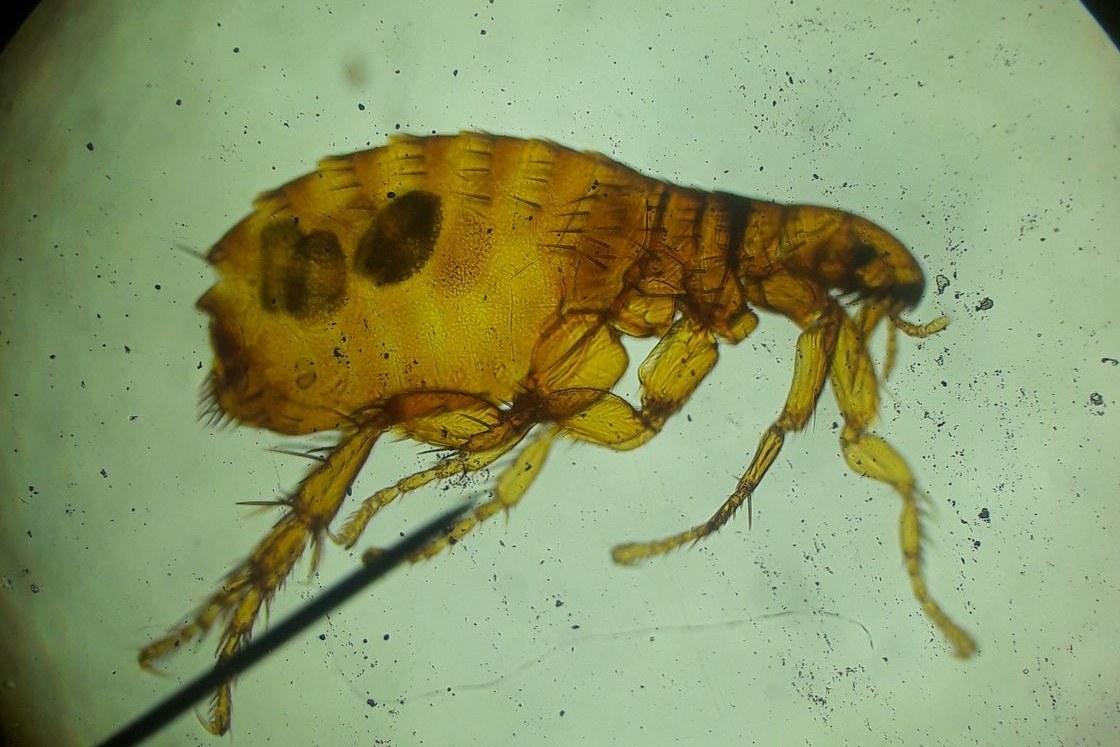
Fleas and ticks are the two pests a dog or cat brings home, and they are the clearest case of a job shared between Apex and your veterinarian. Apex treats the house and the yard: carpet edges, under furniture, pet bedding areas, the shaded ground where the dog lies, the base of the house and the pet run. Your vet treats the animal. Treat one without the other and the cycle restarts within weeks.
Jeff Alexander names fleas after a pet is gone, or at a move-out, as the perfect one-time service. With pets that go outside, fleas can return every season, and the maintenance program keeps the exterior barrier treated with callbacks between visits. Ticks ride in from yard edges and tall grass, and the same house-plus-vet logic applies.
Why Jeff Alexander's Background Matters Here
Before joining Apex in 1988, Jeff Alexander worked as an environmental consultant and industrial hygienist, the profession that measures exposure and decides what protective equipment a job requires. He holds degrees in botany and zoology and a master's degree in biology. That background is why every Apex technician works in long sleeves, long trousers, gloves and safety glasses, the California standard, and why the company talks about products in terms of labels, placement and drying rather than in absolutes.
It is also why Apex keeps repellent and non-repellent chemistry separate and matches the method to the pest. Repellent products kill most insects but scatter survivors; non-repellent products move through a colony by transfer. Knowing which is which is the difference between a treatment that ends an ant problem and one that splits it into three.
Pest Control Around Dogs, Cats, Birds and Fish
Dogs and cats are the usual case, and the practices above cover them: interview, placement out of reach, re-entry guidance, bowls moved. Birds and fish need one more step, because they are more sensitive to airborne product and to anything that reaches water. The technician will ask you to cover or relocate a cage or tank and to switch off an aquarium air pump while an interior room is treated, and will keep interior application away from that room where the pest allows.
Reptiles and small caged animals are handled the same way as birds. If you keep chickens, tell the office; the coop and run are treated as an exterior animal area, and the technician sets expectations about what can and cannot be applied near it.
Pests That Can Harm Pets
Some of the pests Apex treats are a problem for the animals as much as for the household. Fleas and ticks feed on them. Black widow spiders bite a curious cat in a woodpile or a garage corner. Yellow jackets and paper wasps sting a dog that snaps at them near a nest under the eaves or in the lawn. Cockroaches and ants contaminate pet food left out overnight, and an open bowl on the back porch is the most reliable way to invite all of them.
The pet pages on this site cover each one: fleas, ticks, spiders, wasps and yellow jackets, and ants. Every one of them ends with the same practical checklist, because the conditions that draw pests to a home are the conditions a pet owner can change.
Outside our license or specialty
What We Do Not Claim
Apex does not describe any product or treatment as free of risk or made for pets, because the label does not, and neither the Structural Pest Control Board nor the EPA allows a company to say more than the label says. Apex does not treat animals; flea and tick treatment for the pet comes from your veterinarian. Apex does not offer a blanket waiting period for every product; you get the interval for the product used at your home.
If a company tells you its treatment carries no risk at all for every person, pet and surface, ask to see the label. The honest version is what you have read on this page: which product, where it went, and how long to keep the animals off it.
Why homeowners choose Apex
Why Pet Owners Choose Apex
Family owned since 1978. Structural Pest Control Board registration No. 2770, Branch 2, with three named operators, Jeffrey P. Alexander (No. 8484), Brent Brandon (No. 12138) and Jared F. Alexander (No. 14137), whose licenses you can look up. BBB Accredited since 1984 with an A+ rating. A California Pest Management Association member since 1999. About 99 percent of the work is residential single-family homes, most of them with a dog or a cat, and the technician who comes to yours will ask about them before anything else.
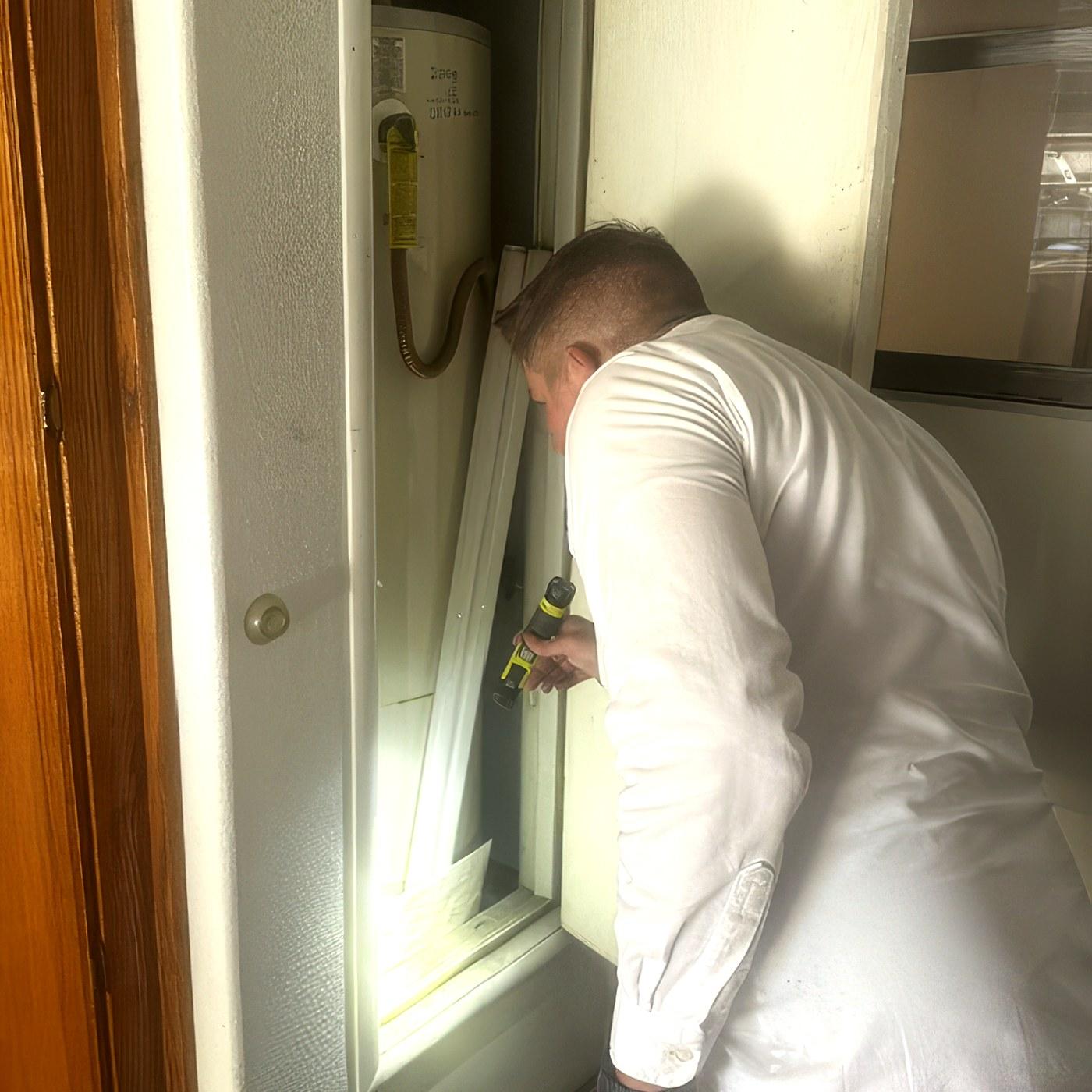
Apex technician checking the water heater closet of a home with a flashlight.
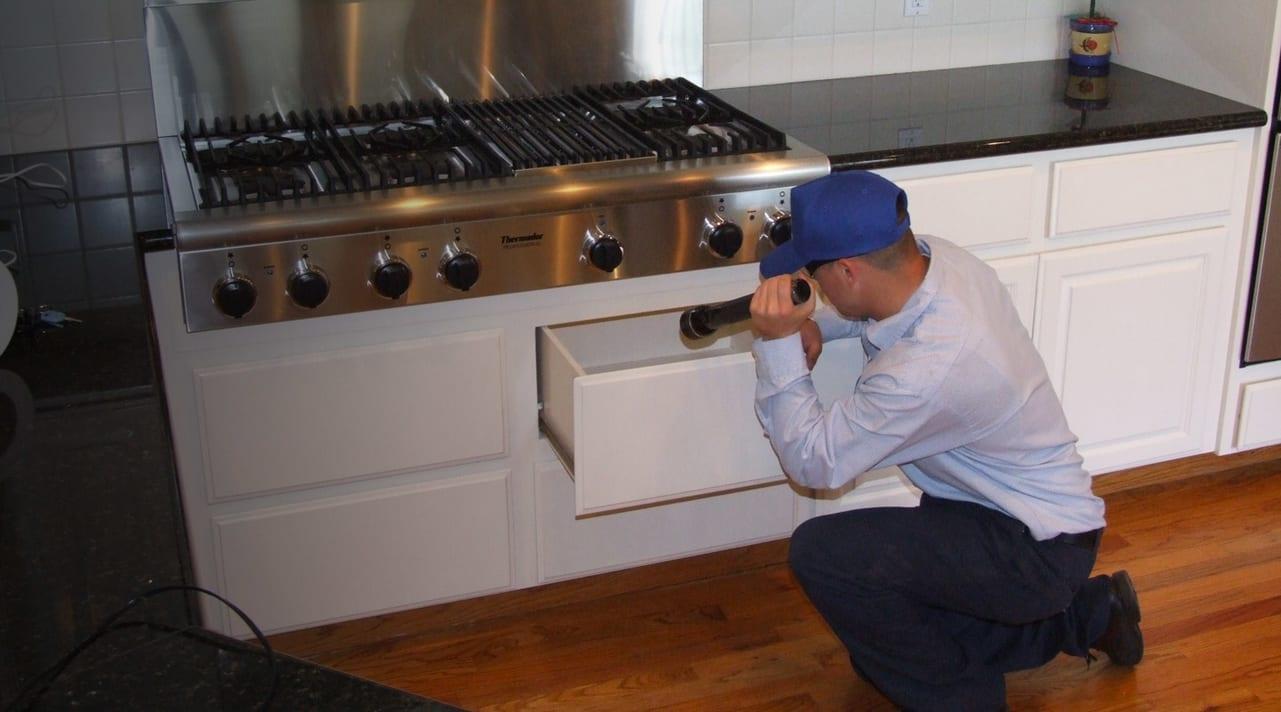
Apex technician kneeling with a flashlight to inspect under a kitchen cabinet toe kick.
Real reviews, unedited
What customers noticed
“On time meet up for first treatment. The tech went over what he would do and treat, and then went to work killing bugs.”
“They showed up right on time and were professional and polite. They answered all my questions and listened to my concerns. We felt they were thorough with their inspection and took their time.”
“We have been customers of Apex for over a year and have been very happy. Mikey, our serviceman, is professional and very thorough.”
Reviews are quoted exactly as written. More reviews
Licensed, accredited, verifiable
Three named Branch 2 operators, one company registration, and a record you can look up yourself.
Branch 2, Structural Pest Control Board, issued 1995, clear status.
Verify: Company registration on the official recordPresident. Botany and zoology degrees, master's in biology, former industrial hygienist.
Verify: Jeff Alexander on the official recordSecretary, and a Branch 2 operator licensed since 2011.
Verify: Brent Brandon on the official recordBranch 2 operator, and the third generation of the family on the route.
BBB accredited since 1984. CPMA member since 1999. 2026 Best of Times, Best Pest Control.
Verify: Accreditation on the official recordCalifornia defines Branch 2 as general household pest control excluding fumigation with poisonous or lethal gases. Branch 3 covers wood-destroying organisms. Technicians renew their licenses every three years with required continuing education.
How long after pest control can pets go outside?
This is the most common pet question the office hears, and the answer is on the label of the product used at your home, adjusted for how fast it dries that day. On a hot, dry Sacramento afternoon an exterior liquid dries quickly. On a cool morning after rain, when the technician switches to a granular product around the base of the home, the guidance is different again. The technician gives you the interval for that visit rather than a number copied from a website.
The general rule that never changes: keep pets off treated areas until they are dry, and keep them away from any bait or station entirely. If you are unsure whether a surface is dry, wait, and call the office with the product name from your ticket.
What does the label actually govern when you have pets?
No licensed company can lawfully say more than the product label says, so Apex answers with practices instead of a promise: products chosen for the pest and the label, baits placed out of reach, treated areas off limits until dry, and re-entry guidance for the specific product used at your home, given to you before the technician leaves.
Does the technician need to meet my pets?
The technician asks about every animal in the interview and, as one Google review describes, often asks to meet them. It helps to know where the dog lies in the yard and where the cat hides, because those are the places treatment either avoids or targets.
Do you offer a pet friendly pest control option?
Every Apex visit is planned around the animals in the home: interview first, product chosen for the pest and label, baits and stations out of reach, interior treatment only where the pest is active, and drying guidance for what was used. That is the option, and it is the standard visit rather than an upgrade.
What about my fish tank or bird cage during an interior treatment?
Cover or move the cage and cover the tank, and switch off the aquarium air pump while the room is treated. Tell the office when you book so the technician plans the interior work around that room.
Can you treat fleas on my dog?
No. Apex treats the house and the yard, and your veterinarian treats the animal. Doing both in the same window is what breaks the flea cycle; doing one without the other lets it restart.
Should I bring pet food inside?
Yes, every night. A bowl of dog food on the back porch draws ants, roaches and rodents, and it is one of the first things a technician mentions after the walk-around. Bringing it in is the simplest prevention step a pet owner has.
Related on this site
Next step
Start with a phone estimate.
Tell the office your home's square footage and what you have been seeing. The estimate is confirmed at the home, because the interview and the walk-around often turn up more than the caller described.
Monday to Friday, 8 a.m. to 5 p.m.