Branch 2 general household pest control
Yellow Jacket Exterminator and Nest Removal
You noticed a steady stream of striped insects going in and out of a hole in the lawn, or they found the patio table the moment food came out. Yellow jackets are the wasps that ruin September. They nest in the ground and in wall voids, defend the nest aggressively, and get hungrier and bolder as the colony peaks in late summer.
Monday to Friday, 8 a.m. to 5 p.m. Estimates come from your home’s square footage and what you are seeing.
SourcesWritten from the interview with Jeff Alexander, Apex’s verified business facts, and the references linked at the end of the page.Last updated September 2026.
Apex Pest Control has handled yellow jacket nest removal for Sacramento-area homes since 1978 under Branch 2 general household pest control registration No. 2770. Jeff Alexander noted that yellow jackets were especially bad in 2026, and the calls that season bore it out.
Yellow Jacket Extermination for Homes
A yellow jacket exterminator visit starts with finding the nest, which is usually not where the yellow jackets are being a problem. The technician watches the flight line from the patio or the trash cans back to its source, confirms the species, and treats the nest itself rather than the foragers. The office gives estimates by phone.
Underground Yellow Jacket Nests
Most Sacramento-area yellow jacket nests are in the ground, in an abandoned rodent burrow or a soft spot under a shrub. The entrance is a single hole with constant traffic.
Nests in lawns and planter beds
Mowing over an underground nest is how most people find out they have one. Mark the spot, keep everyone away, and leave it alone until the technician treats it.
Nests in wall voids and under decks
Yellow jackets also nest behind siding, in attic eaves and under deck boards. Never seal the entrance; a blocked colony chews its way out, sometimes into the house. The technician treats the void through the opening they are using.
How to Tell Yellow Jackets From Other Wasps and Bees
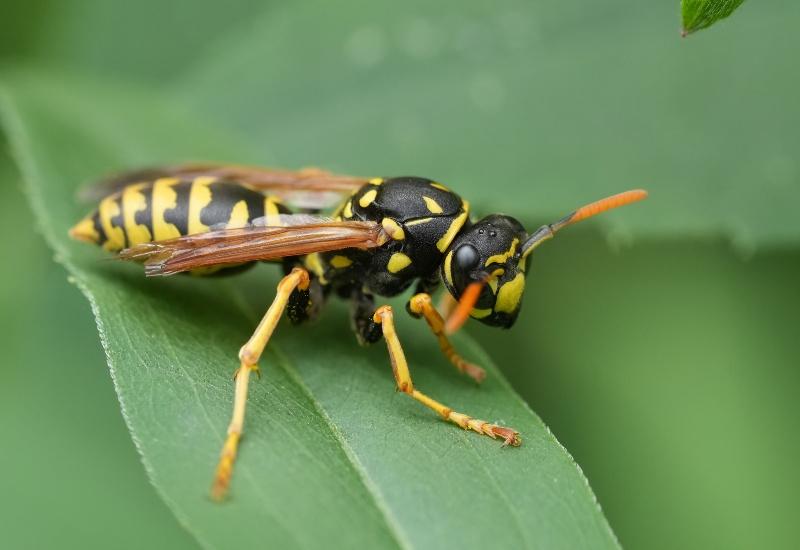
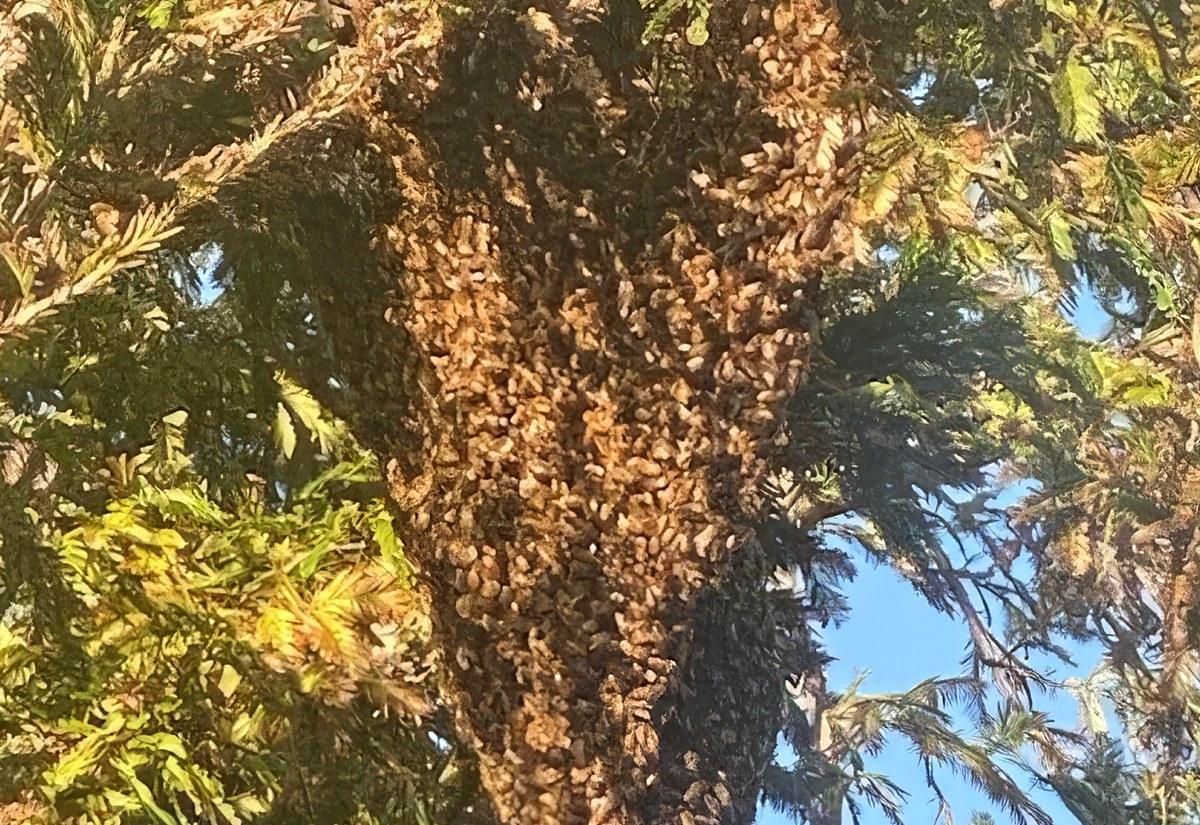
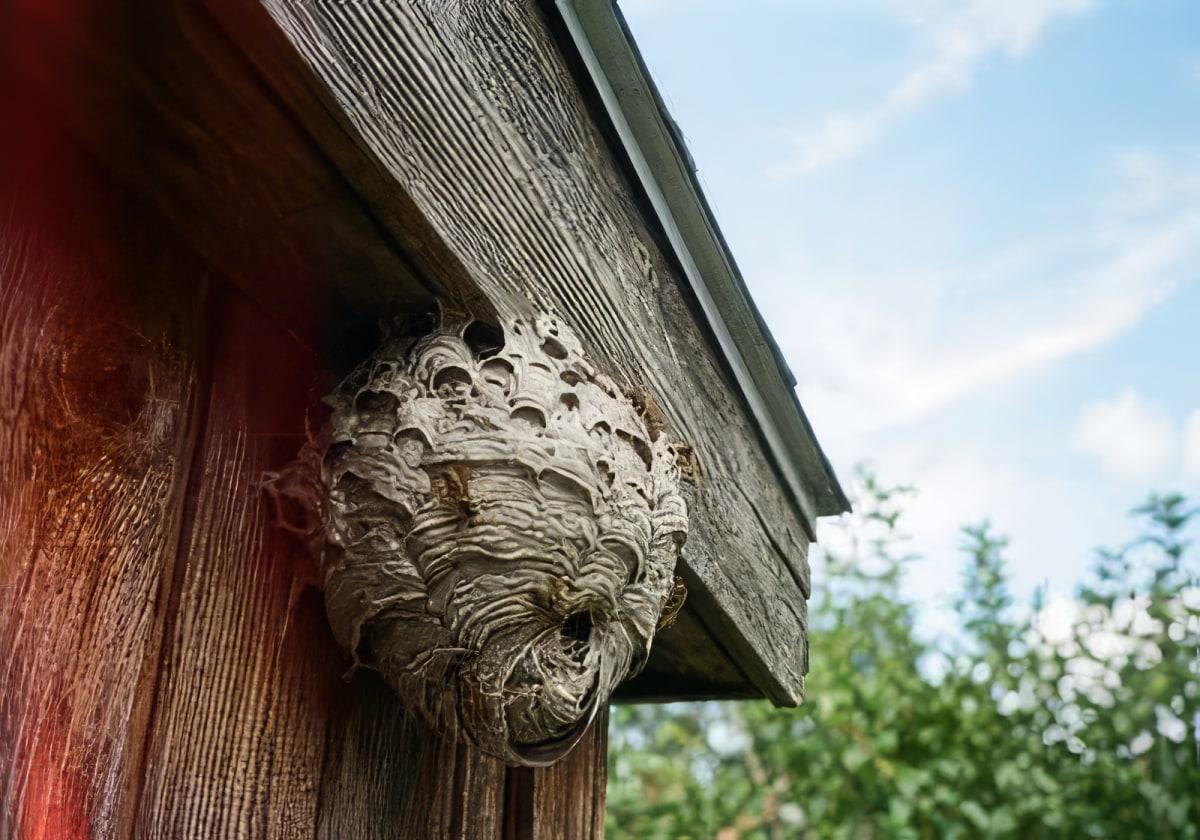
Yellow jackets are compact, bright yellow and black, with little of the hair a honey bee has, and they fly fast and low. Paper wasps are longer, with dangling legs, and build the open comb you see under an eave. Honey bees are fuzzy and golden brown, and a hanging cluster of thousands in a tree is a swarm, not a nest.
That distinction matters because honey bees are referred to a beekeeper first, and paper wasps get a different treatment than a ground nest. The technician confirms the species before anything is treated. Our wasp removal page covers paper wasps and mud daubers.
Sacramento seasons
Why Yellow Jackets Get Aggressive in Late Summer
A yellow jacket colony starts with one queen in spring and grows all summer. By late August and September the nest is at its largest, the natural insect food is thinning, and the workers switch to scavenging sugar and protein, which is why they show up at picnics, soda cans and trash lids. Cooler weather does not make them calmer; it makes them hungrier until the first cold nights end the colony.
From November to February, when temperatures drop below 40, the colony dies. Only new queens survive the winter, and they start fresh nests elsewhere in spring. An old nest is not reused.
How it works
How Our Yellow Jacket Removal Works
Every visit follows the same order, with extra attention to safety around an active nest.
Interview: where you see the traffic, where you have been stung, when it is worst
Property walk to trace the flight line to the nest entrance
Identification: yellow jacket, paper wasp or honey bee
Treatment of the nest at its entrance, from the ground
Recommendations on trash, fallen fruit, pet food and lighting
What the Technician Looks For on the Walk
Finding the nest is most of the job. The technician stands where the yellow jackets are bothering you, watches which direction they leave, and follows the line: across the lawn to a hole the mower has been skipping, to a gap where the siding meets the foundation, to the corner of a deck, or up under a first-floor eave. A second entrance is common, and the walk around the whole property is how it gets found.
The walk also turns up what is drawing foragers: an open trash can, a fruit tree dropping plums, a dog bowl on the back porch, or a porch light left on all night that feeds the colony insects. Those become the recommendations at the end of the visit, and they are the difference between one nest this year and another next year.
How Yellow Jacket Removal Is Priced
Estimates are given over the phone from the home's square footage and what you are seeing. The office schedules Monday to Friday, 8 a.m. to 5 p.m., and technicians are dispatched.
Nests We Can and Cannot Reach
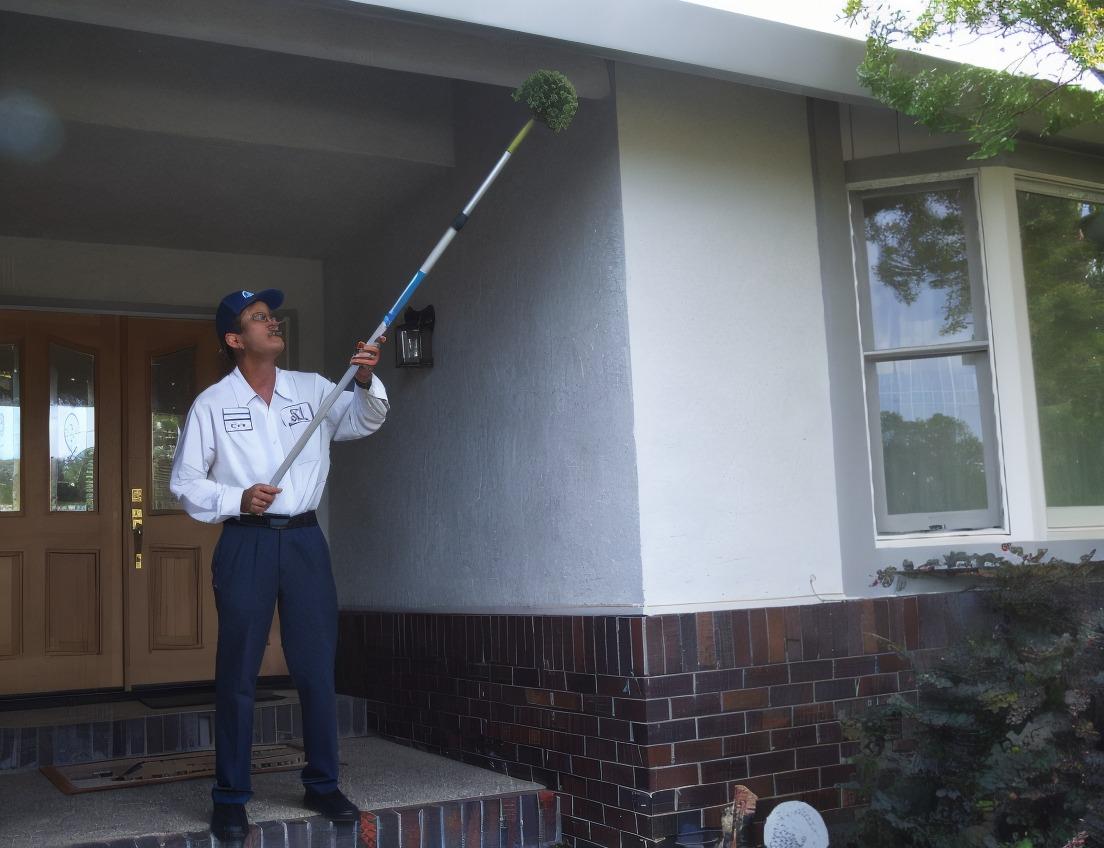
Apex treats yellow jacket nests from the ground. On a one-story home the technician can treat eave and tile ridge cap nests with an extension pole. Apex does not put technicians on ladders for wasps on two-story homes, and the technician will say so and set expectations rather than promise something we will not do. That boundary is part of the service.
What you can do
Preventing Yellow Jackets Around Patios and Trash
Treatment removes the nest. The conditions around the house decide whether foragers keep coming.
- Keep trash and recycling lids closed and rinse cans before they go out
- Pick up fallen fruit under trees
- Do not leave pet food outside
- Cover food and drinks on the patio, and check cans before sipping
- Keep outdoor lights off when they are not in use; the insects they draw feed a colony
- Fill old rodent burrows and soft spots along foundations before spring
Yellow Jackets on a Maintenance Program
Yellow jackets are covered on the on-going maintenance program, which treats the exterior barrier of the home on every visit: foundation, garage, doorways, first-floor eaves, fence lines and yard areas. Maintenance customers in good standing receive callbacks for covered pests between regular visits at no additional charge. For a single nest at a home that does not otherwise need service, a one-time visit is the honest recommendation.
Why homeowners choose Apex
Why Choose Apex for Yellow Jacket Removal
Family owned since 1978, registered with the Structural Pest Control Board (No. 2770, Branch 2), with three named operators, Jeffrey P. Alexander (No. 8484), Brent Brandon (No. 12138) and Jared F. Alexander (No. 14137). BBB Accredited since 1984 with an A+ rating. California Pest Management Association member since 1999. Named Best Pest Control in the 2026 Best of Times awards. The extra five minutes on a yellow jacket call is the walk that finds the second entrance.
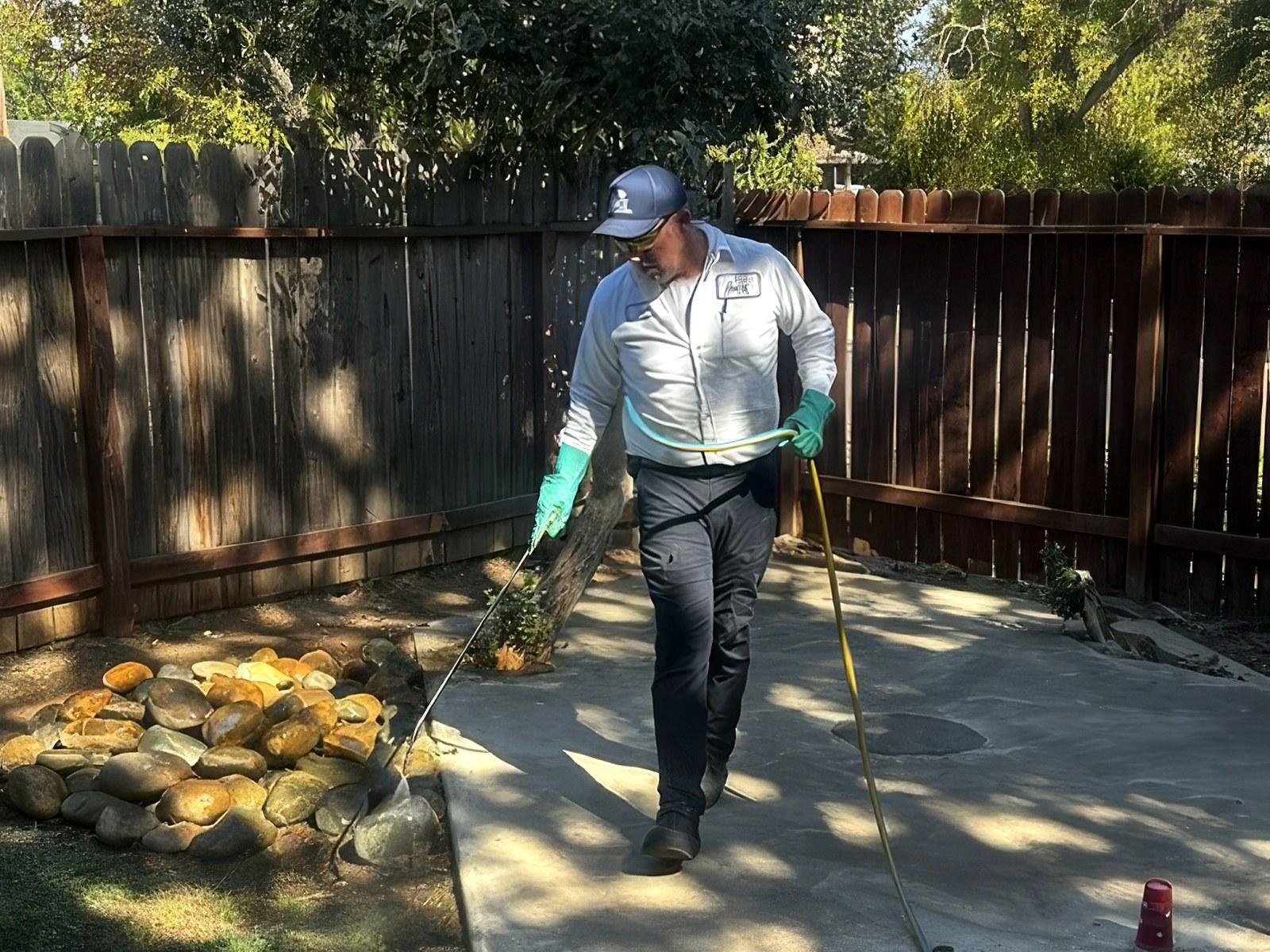
Apex technician walking a back garden with the treatment hose, following the patio edge past a rock border.
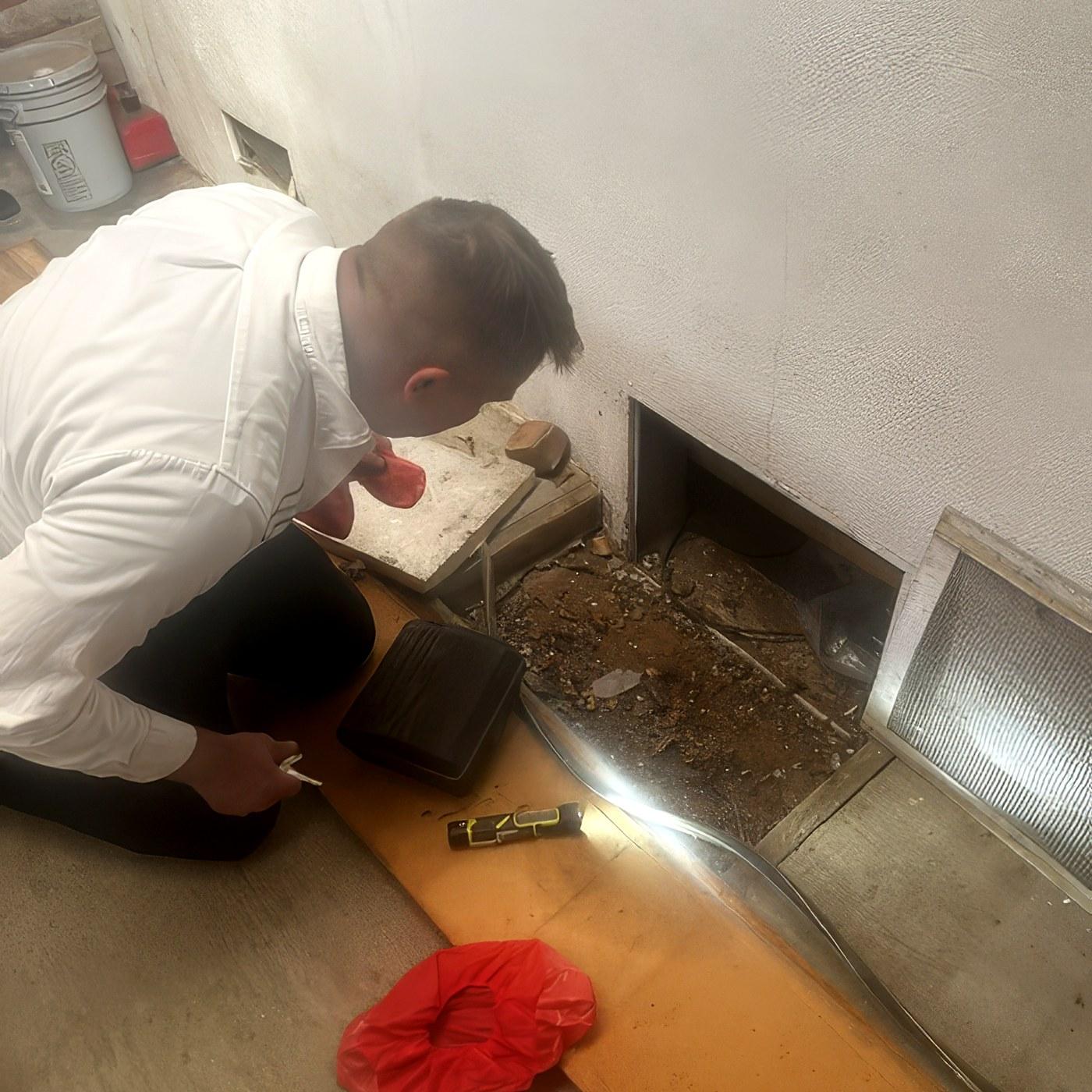
Apex technician kneeling at an open crawl space vent with a flashlight, a shoe cover on the floor beside him.
Real reviews, unedited
What customers noticed
“We called Apex on a Tuesday afternoon they came out that Thursday. The office is very polite and helpful I was looking for that after having bad experiences with our last pest control company.”
“We have been customers of Apex for over a year and have been very happy. Mikey, our serviceman, is professional and very thorough.”
“They showed up right on time and were professional and polite. They answered all my questions and listened to my concerns. We felt they were thorough with their inspection and took their time.”
Reviews are quoted exactly as written. More reviews
Licensed, accredited, verifiable
Three named Branch 2 operators, one company registration, and a record you can look up yourself.
Branch 2, Structural Pest Control Board, issued 1995, clear status.
Verify: Company registration on the official recordPresident. Botany and zoology degrees, master's in biology, former industrial hygienist.
Verify: Jeff Alexander on the official recordSecretary, and a Branch 2 operator licensed since 2011.
Verify: Brent Brandon on the official recordBranch 2 operator, and the third generation of the family on the route.
BBB accredited since 1984. CPMA member since 1999. 2026 Best of Times, Best Pest Control.
Verify: Accreditation on the official recordCalifornia defines Branch 2 as general household pest control excluding fumigation with poisonous or lethal gases. Branch 3 covers wood-destroying organisms. Technicians renew their licenses every three years with required continuing education.
Should you treat a ground nest yourself?
Store aerosols reach the entrance, not the nest, and an underground colony disturbed in daylight defends itself. Pouring gasoline or water into a nest is dangerous and does not work. If you are allergic to stings, a yellow jacket nest is not a job to attempt at all. The visit costs less than the emergency room.
What are the signs of a yellow jacket nest?
Constant traffic in and out of one spot: a hole in the lawn or planter bed, a gap in siding, or a corner of the eave. Foragers at the patio and the trash are the symptom; the nest is usually within a short flight of it. Watch the direction they leave in.
Do yellow jackets sting more than once?
Yes. Unlike honey bees, yellow jackets keep their stinger and can sting repeatedly, and they defend a disturbed nest as a group. Anyone with a known sting allergy should stay well clear and let the technician handle it.
Can yellow jackets damage my house?
A nest in a wall void can grow large enough to soften drywall over a season, and a sealed entrance sends them chewing toward the interior. Do not seal the opening. The technician treats the void through the entrance the colony is using.
How long does professional yellow jacket control last?
A treated nest does not recover, and yellow jackets do not reuse old nests. Activity at the entrance can continue for a day or two as foragers return and die off. New queens can nest nearby next spring if the same conditions are there, which the prevention steps address.
Do you treat honey bees too?
Honey bees are referred to a beekeeper first. A swarm resting in a tree usually moves on within a day or two and is left alone. Treatment is a last resort only when bees are inside a structure and no beekeeper will take them.
Should I fill the hole after the nest is treated?
Wait until traffic has stopped for a few days, then fill it. Filling an active entrance before treatment traps a live colony that will dig out somewhere else. Once the nest is dead, filling old burrows and soft spots along the foundation removes a ready-made site for next spring's queens.
When is the best time to treat a yellow jacket nest?
As soon as it is found. A small colony in early summer is far easier than the same colony in September. Apex schedules Monday to Friday, 8 a.m. to 5 p.m., and the technician treats the nest from the ground on the visit.
Related on this site
Next step
Start with a phone estimate.
Tell the office your home's square footage and what you have been seeing. The estimate is confirmed at the home, because the interview and the walk-around often turn up more than the caller described.
Monday to Friday, 8 a.m. to 5 p.m.